
 By
By 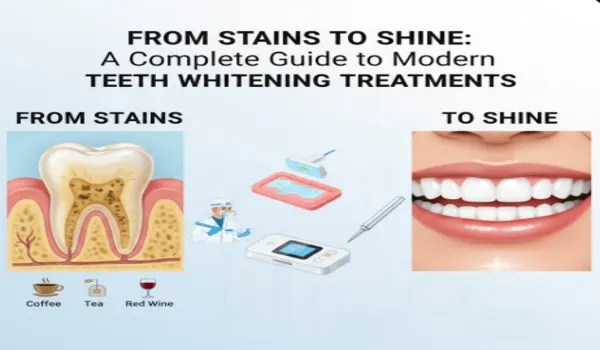
A bright, confident smile plays a major role in personal appearance and self-confidence. Over time, however, teeth naturally lose their brightness due to lifestyle habits, aging, and environmental factors.
Modern dentistry has introduced advanced whitening solutions that safely and effectively restore tooth color. This guide explains how today’s whitening methods work, who they are for, and how to maintain long-lasting results.
Understanding Why Teeth Get Stained
Teeth stains develop in two main forms: surface stains and deep stains. Surface stains are caused by foods and drinks such as coffee, tea, red wine, and colored sauces. Smoking and poor oral hygiene also contribute to discoloration.
Deep or intrinsic stains occur within the tooth structure and may result from aging, certain medications, or trauma. Recognizing the type of stain is essential in choosing the most effective whitening method.
What Is Modern Teeth Whitening?
Modern teeth whitening involves the use of scientifically developed agents designed to safely lighten tooth color. These agents penetrate the enamel and target stain molecules without harming the tooth structure.
Unlike older methods, today’s treatments are more controlled, predictable, and tailored to individual needs. A professionally guided Teeth Whitening Treatment ensures uniform color improvement and reduced sensitivity.
Types of Teeth Whitening Treatments
There are several whitening options available today. In-clinic whitening is performed by dental professionals using high-concentration gels and, in some cases, light activation to accelerate results. Take-home professional kits use custom trays and dentist-approved gels for gradual whitening.
Over-the-counter products such as strips and toothpaste can help with mild staining but typically offer limited results compared to professional care.
Professional vs Over-the-Counter Whitening
Professional whitening stands out due to safety, effectiveness, and longevity. Dentists evaluate oral health before starting treatment, ensuring gums and enamel are protected.
Over-the-counter products lack customization and often deliver uneven results. A dentist-supervised Teeth Whitening Treatment reaches deeper stains and provides brighter, more consistent outcomes.
The Science Behind Whitening Agents
Most whitening systems rely on peroxide compounds. These compounds release oxygen molecules that break down stains through oxidation.
As stain particles are reduced in size, they reflect less light, making teeth appear whiter. This chemical reaction explains why whitening can significantly improve appearance without physically removing enamel.
Managing Sensitivity and Safety
Tooth sensitivity is a common concern, but modern techniques have significantly reduced discomfort. Dentists use protective barriers, desensitizing agents, and controlled exposure times. Temporary sensitivity usually subsides within a few days. Professional treatments prioritize safety while maximizing results.
Maintaining Whitening Results
Long-term success depends on proper aftercare. Limiting stain-causing foods and beverages, practicing good oral hygiene, and attending regular dental cleanings help preserve whiteness.
Touch-up treatments may be recommended periodically. Consistent care ensures that a Teeth Whitening Treatment remains effective over time.
Conclusion
Modern teeth whitening has evolved into a safe, effective, and customizable solution for restoring smile brightness. By understanding stain types, choosing the right treatment, and maintaining proper oral habits, individuals can achieve lasting results.
With professional guidance and modern techniques, transforming teeth from stained to shining has never been more achievable.
FAQs
1. How quickly can I see results from teeth whitening?
In-clinic treatments often show noticeable results immediately, while take-home kits work gradually.
2. Is teeth whitening suitable for everyone?
Most people can undergo whitening, but those with untreated dental issues should consult a dentist first.
3. Does whitening damage enamel?
No, when performed correctly, whitening does not harm enamel.
4. How long do whitening results last?
Results vary but can last from several months to a few years with proper care.
5. Can whitening remove all types of stains?
Surface stains respond best, while deeper stains may require multiple sessions.



















Comments